 By Victoria · Brainy Pom owner
For 7 Days I Wrote Down Every Problem My Pomeranian Caused. Almost Every One Had the Same Cause.
Why she barks at the door, snaps when you brush her, cries when you leave and pulls on the leash, why treats and "no!" made each one worse, and the 5-minute daily routine that settled them together.
- 7:02 am barked at the mail truck
- 9:40 am snapped when I brushed her back legs
- 11:15 am cried 20 min when I left for church
- 3:30 pm pulled and lunged at a dog on our walk
- 6:10 pm accident by the front door
The Note on My Door Said "Please Do Something About Your Dog"
The note was taped to my door on a Tuesday morning.
"Please do something about your dog. She barks all day when you're out."
I stood in the hallway and read it three times. I've had dogs most of my life. Nobody had ever left me a note.
That same week she snapped at me when I brushed her back legs. She cried for twenty minutes when I left for church. And on Sunday my nephew asked if she could stay in the bedroom while he visited.
I love that little dog. But that week I was exhausted, and I was embarrassed.
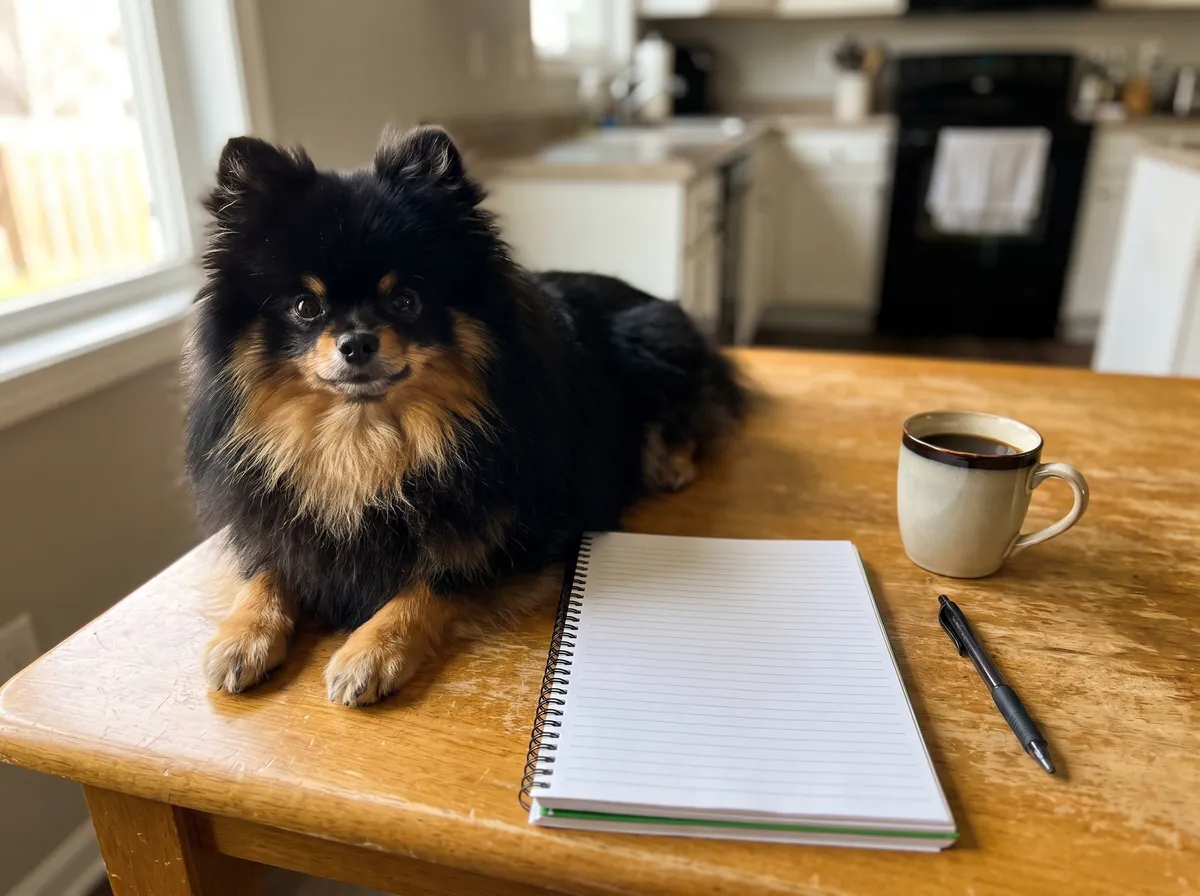
So I did something simple. For 7 days I kept a notebook on the kitchen counter. Every time she barked, snapped, cried, pulled or had an accident, I wrote down the time and what had just happened.
By Sunday there were 63 entries.
When I read them back, I saw what every trainer, book and video had missed. Almost every entry happened for the same reason.
It wasn't stubbornness. It wasn't my fault. And it isn't yours.
Today she watches the door from her bed instead of barking at it. When my nephews visit, she barks once and lies down next to them. It took 5 minutes a day.
In this article I'll show you the one reason behind almost all of it, why the usual fixes (treats, "no!", picking her up) make it worse, and the exact 5-minute routine I used.
If your Pom barks, snaps, cries when you leave or pulls on the leash, please read this to the end. It takes about 8 minutes.
I Grew Up Training Big Dogs. Then a Pomeranian Made Me Feel Like a Beginner.
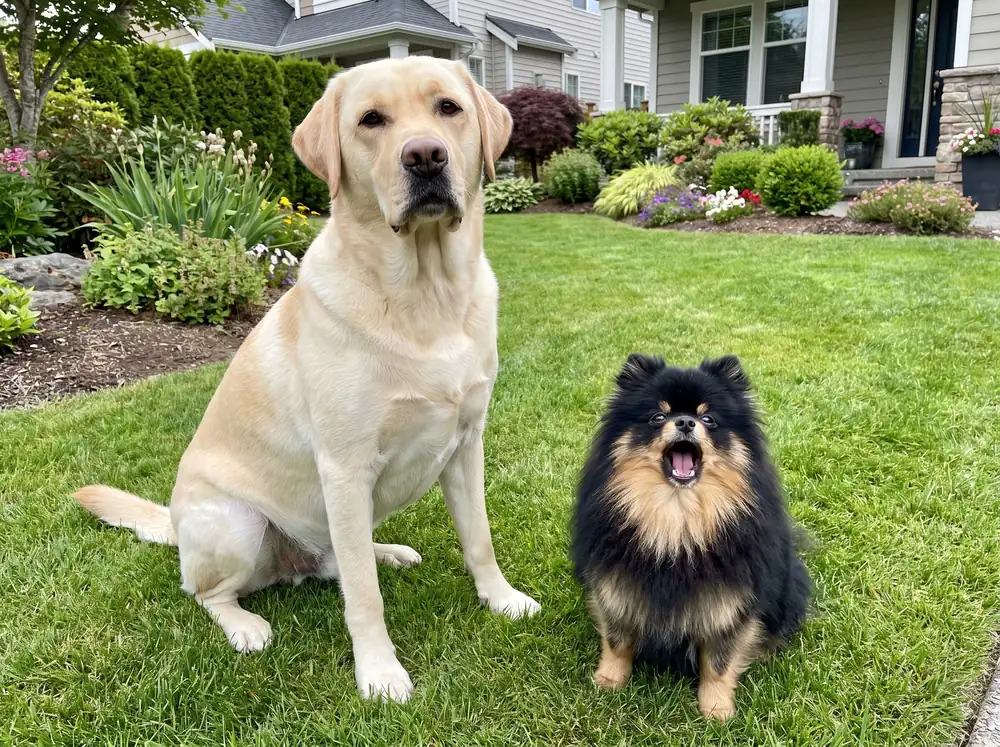
My name is Victoria. I grew up with dogs. My family always had big ones. Two Labradors, a German Shepherd and a collie mix who lived to fifteen.
I helped my dad train every one of them. By the time I was a teenager, I was the one friends called when their dog misbehaved.
My advice was always the same. Be firm. Say "no" like you mean it.
Give her a treat when she's quiet. Don't let her get away with it.
It worked on every dog I'd ever known. So I believed it worked on every dog.
Then I brought home Kiwi. My first small dog.
Within a year, everything I knew had stopped working.
The firmer I was, the louder she barked. The treats for being quiet made her bark sooner. When I picked her up to calm her, she snapped at my hand.
At her puppy class, the trainer watched her for a minute and said, "She's the most stubborn dog in the group."
I sat in my car afterwards and cried. All those years with dogs, and I felt like a beginner.
If you've had dogs for 30 or 40 years, I think you feel this even more than I did. You know how to raise a dog. And this little dog makes you look like you don't.
You haven't forgotten how to raise a dog. You were given advice that was made for a different kind of dog. I'll show you exactly what I mean.
Today I run Brainy Pom, where I help other Pom owners with these same problems. More than 150 Pom owners have now used the plan I built from that week.
But last spring, I was the one with a note taped to her door.
My Nephew Hid Behind His Mum. Then My Sister Asked If Kiwi Would Be Happier With Someone Else.
That Sunday, my sister came for lunch with her son Leo. He was six, and he loved dogs.
Kiwi heard the car door and started barking. She didn't stop when they rang the bell. She didn't stop when they came in.
Leo stood behind his mum's legs and wouldn't come into the living room.
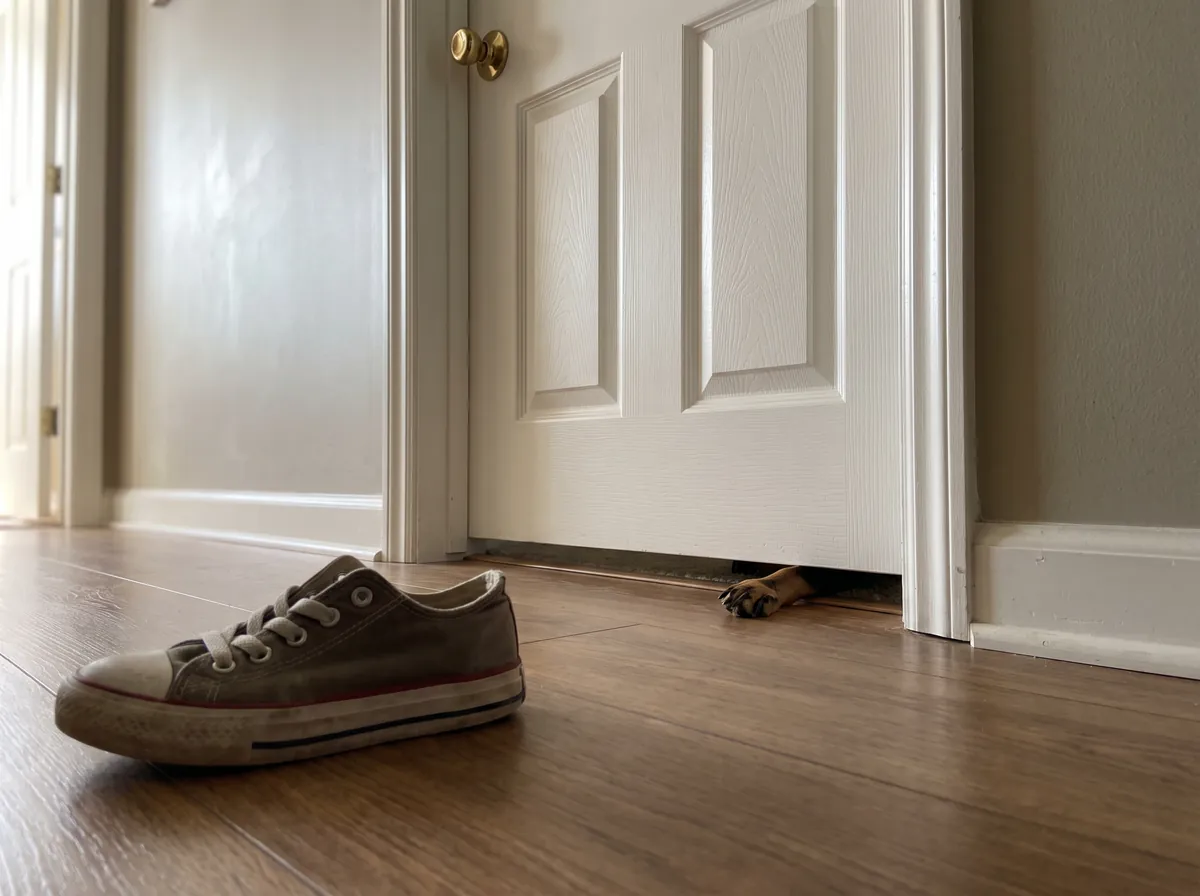
So I did what I'd done before. I carried Kiwi to the bedroom and shut the door.
She cried and scratched at that door for the whole lunch. We could hear her over the conversation. Leo kept looking down the hallway.
Then he asked me, "Why is Kiwi angry at me?"
I didn't have an answer for him.
Later, while we were washing up, my sister said it quietly. "Vic, maybe she'd be happier with someone who has more time."
I said no. I meant it. Kiwi is my dog, and that was never going to change.
But that night I didn't sleep. I kept hearing her scratching at the bedroom door while my family ate without her.
If you have grandchildren, I think you know this feeling. The visit you look forward to all week. The dog you love, shut in another room, crying. And the little face asking why.
Lying awake that night, I decided I was going to find out what was really going on with her. On Monday morning I put a notebook on the kitchen counter.
63 Entries in 7 Days. When I Read Them Back, Every Kind of Problem Had a Pattern.
- 7:01 am barked at the mail truck
- 7:40 am barked at the neighbour's door
- 8:15 am snapped when I reached over her for the remote
- 9:30 am cried when I picked up my keys
- 10:05 am pulled and lunged at a bike coming towards us
- 11:20 am barked at a dog two houses down
- 1:45 pm snapped when I brushed her back legs
- 3:10 pm cried when I put my shoes on
- 4:30 pm lunged at a man with a big bag
- 6:00 pm accident on the mat by the front door
The rule was simple. Every time Kiwi barked, snapped, cried, pulled or had an accident, I wrote down the time and what had happened just before.
By Sunday night I had 63 entries. I sat at the kitchen table with a highlighter and read them all.
The barking first. I had always said she barked at nothing. But next to almost every bark I had written something.
The mail truck. The neighbour's door. A dog two houses down that I only heard when I went outside to check.
She was barking at real things. Things I couldn't hear yet.
Then the snapping. Every snap happened when my hand came from above or behind her.
Brushing her back legs. Picking her up. Reaching over her for the remote.
She never snapped when my hand came from the front, low down, where she could see it.
Then the crying. It never started when I left. It started when I picked up my keys or put my shoes on. She was reacting before I had even opened the door.
Then the pulling. On every walk, she pulled and lunged at the same things. Other dogs. A man with a big bag. A bike coming towards us.
Never at anything moving away from us.
Even the accidents. Four of the five were on the mat by the front door.
I put the pen down and looked at the page. Almost every entry happened when Kiwi was guarding something.
The house. The front door. Me. Or herself.
I had never once thought of her as a guard dog. She weighs seven pounds.
So that night I looked up the official breed standard for the Pomeranian's family, the German Spitz. One sentence in it explained the whole notebook.
Your Pomeranian Is a Spitz. She Was Bred to Guard the House, and She Thinks It's Still Her Job.

The Pomeranian is a Spitz. It comes from the same family of dogs as the Husky, the Samoyed and the Keeshond.
The international breed standard for the German Spitz, the family the Pomeranian belongs to, calls it "the oldest breed of dog in Central Europe." And it describes the Spitz as "the ideal companion and family dog and watch dog for home and farm."
The early Pomeranians were much bigger dogs, and their job was to bark the moment anything came near the house. They were bred smaller over many generations. The guarding instinct was never bred out.
Now compare that to the dogs most of us grew up with. Labradors, Retrievers, Shepherds and collies were bred to watch a person and wait for an instruction. That's why "sit", "no" and a treat work so well on them.
Almost all mainstream dog training was built on those dogs. So was the advice I gave my friends for years.
A Spitz doesn't wait for your instruction. She thinks she's the one who has to deal with the danger.
I'll use one comparison, because it's the clearest way I know to explain it. Kiwi works like a smoke alarm in one exact way. A smoke alarm sounds when it detects something, and it keeps sounding until a person comes and checks it. Shouting at it doesn't switch it off, and neither does anything you give it. Kiwi barked at the door, and kept barking, because in her mind nobody had come to check.
That's also why the snapping, the crying and the pulling are part of the same problem. A dog who guards the house defends herself when a hand comes from above. She panics when the person she guards walks out the door. She lunges at whatever comes towards you.
Kiwi wasn't stubborn. And I wasn't a bad owner. She was doing her breed's job every hour of the day, and she was exhausted too.
The 4 Fixes Everyone Tries. Each One Makes a Spitz Worse.
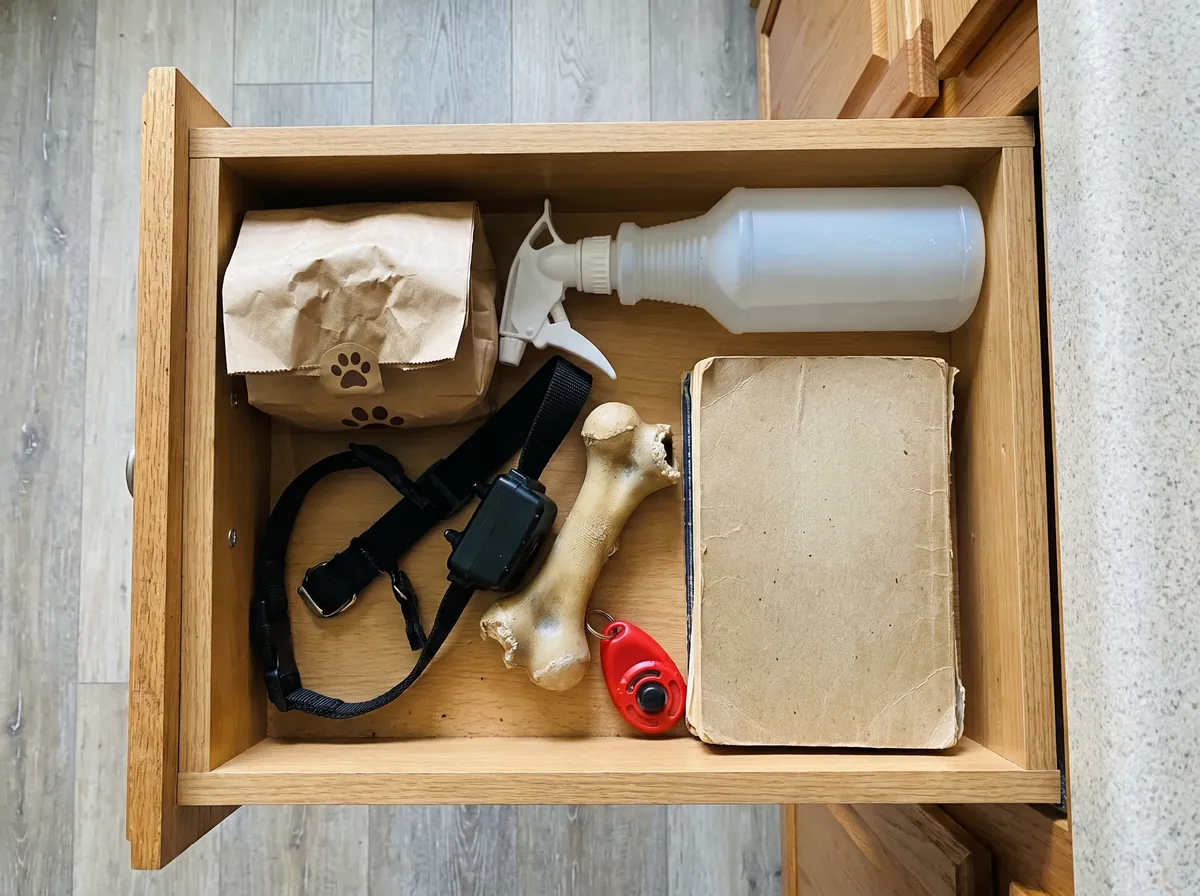
Every fix I had tried was built for a dog who waits for instruction. On a Spitz, each one does the opposite.
Fix 1: A treat to make her stop. The treat arrives right after the bark. So she learns that barking makes treats appear.
Fix 2: "Quiet!" or "No!" in a firm voice. To a Spitz, a raised voice means you have noticed the danger too. You haven't stopped her barking. You've joined in.
Fix 3: Picking her up, a spray bottle, or an anti-bark collar. Each one tells her that something scary really is happening. And picking her up from above is the exact movement she snaps at.
Fix 4: Ignoring her. To a Spitz, that means nobody has come to check. So she barks longer and louder, until someone does.
I had done all four, often on the same day. But the notebook also showed me a fifth way.
The Fifth Way: Show Her That You've Taken the Job Off Her
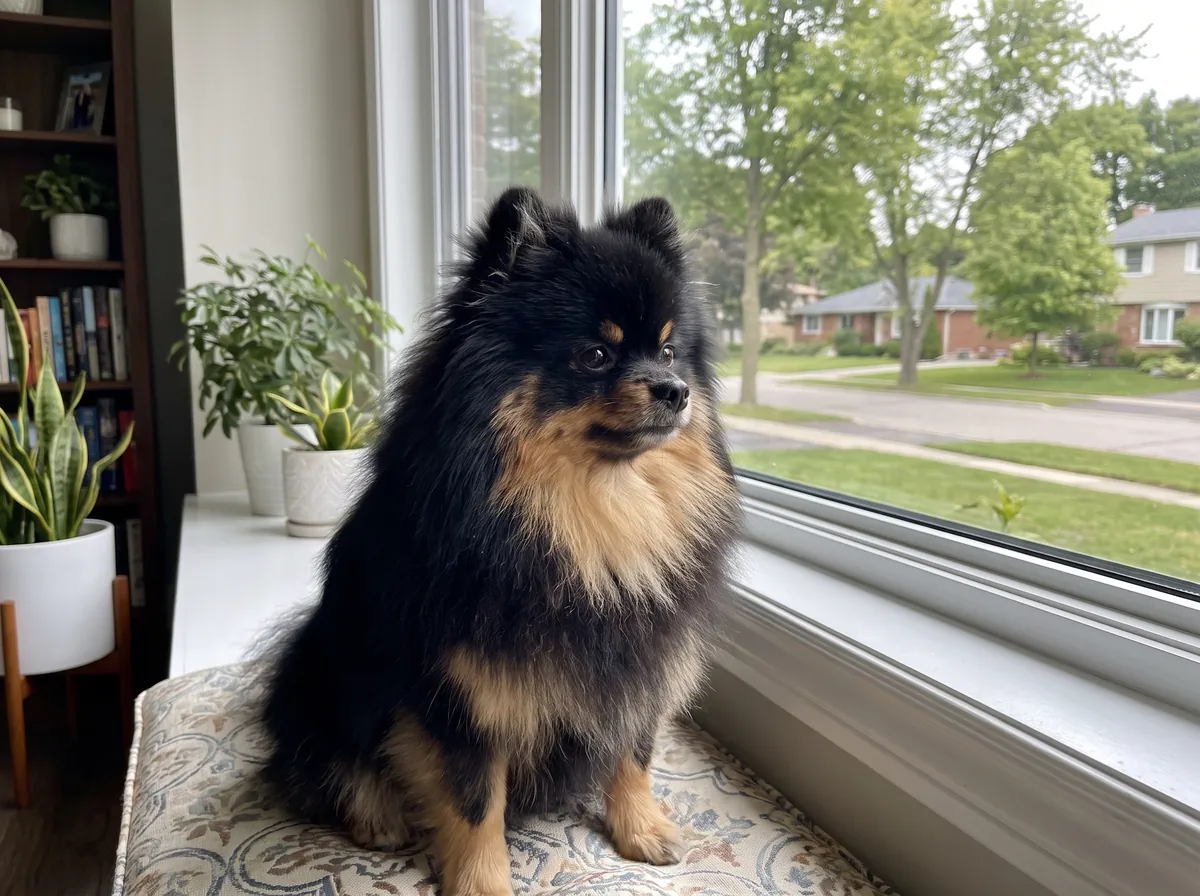
If Kiwi barks because she thinks guarding the house is her job, then the fix is to show her it's mine.
The first time I tried it, the mail truck came at 7 o'clock as usual. Kiwi ran to the window and started barking.
I didn't shout. I didn't give her a treat. I didn't ignore her.
I walked to the window, looked out where she was looking, and said once, calmly, "Thank you, I've got it." Then I turned around and walked back to the kitchen.
She barked twice more. Then she followed me.
Think about it from her side. Someone came. Someone checked. Someone said they were handling it. For the first time, someone had come when she barked.
On the farms these dogs were kept on, that's how it always worked. The dog barked. A person came out, looked, and dealt with it. That is the answer a watch dog's bark was always waiting for.
People who live with Spitz breeds call it "thanking the dog for the warning." Pom owners online say it in their own words: "Thank you! All done!"
The same idea works for every problem in my notebook. I just had to work out how.
I Turned My Notebook Into a Plan So You Don't Have to Work It Out Alone
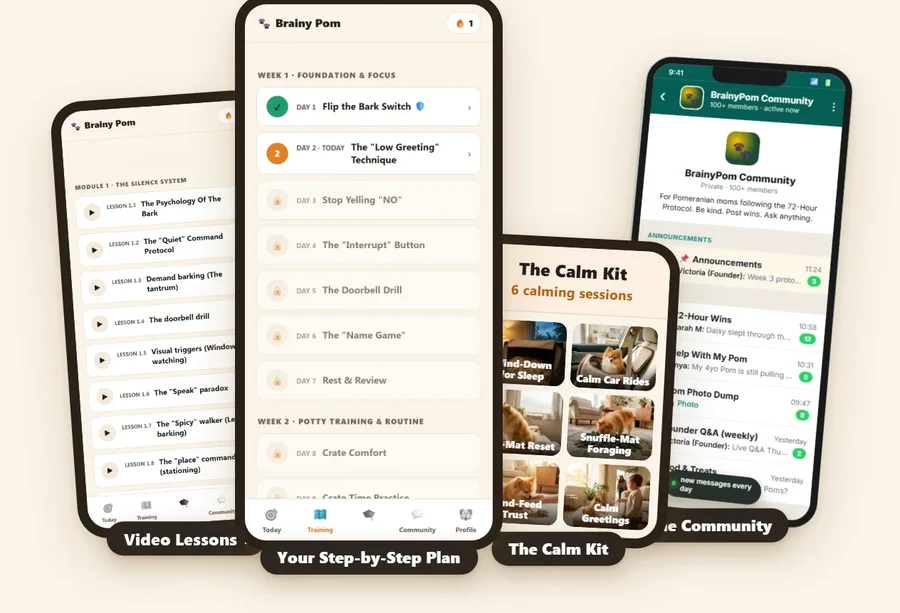
So I worked out the same answer for each problem in my notebook.
For the snapping, my hand stopped coming from above. I brushed her from the side, low down, three strokes at a time, and stopped before she wanted me to.
For the crying, I picked up my keys and put them down again, many times a day, without leaving. Then I left for one minute. Then for five.
For the pulling, I stopped and turned us away from the dog or the bike before she started, so she didn't have to deal with it.
Then friends started sending me their Pom owners. Then their friends did too. Every one of them had the same notebook. They just hadn't written it down.
Turning my notes into something other people could follow took months. My first version was 40 pages long, and nobody finished it. So I cut every step down until it fit into 5 minutes a day, and I filmed each one so you can watch it instead of reading it.
Barking at the door. Snapping at the brush. Crying when they leave. Pulling on the walk.
So I turned everything into a step-by-step plan, built only for Pomeranians and other Spitz dogs. I called it the Off-Duty Method, because that's the whole goal: a dog who no longer believes guarding the house is her job.
Here's what's inside:
The Off-Duty Method. The step-by-step plan, with a short video lesson for each problem: the door and the window, being left alone, the brush and being handled, accidents and the leash. About 5 minutes a day.
The Calm Kit. 6 short calming sessions for the hardest moments.
The Daily Pom IQ Quiz. 3 quick questions a day, so you understand what your Pom is thinking.
The private community. Real Pom owners working on the same things, sharing what worked.
Everything is on your phone, in one simple app. You don't need to be good with technology. If you can read this article, you can use it.
It's gentle. No shouting. No collars. No sprays. No "being the alpha."
It's not a general obedience course with a Pomeranian on the cover. Every lesson was made for a Spitz.
And it works for older dogs too. The steps are the same whether your Pom is 1 or 12.
My Notebook Again, Three Weeks Later
- Day 1 14 barks at the mail truck
- Day 3 4 barks
- Day 6 brushed her back legs, no snap
- Day 10 barked once, back to her bed
- Week 3 quiet on the sofa when I left
This is what those 5 minutes a day did for Kiwi. I kept writing in the notebook, because I wanted to see if it was really working, or if I was just hoping.
Day 1: 14 barks at the mail truck.
Day 3: 4 barks. She stopped when I said "thank you."
Day 6: I brushed her back legs for the first time in months. No snap.
Day 10: The mail truck came. She barked once and walked back to her bed.
Week 3: I left for church. My phone camera showed her lying on the sofa two minutes after I closed the door.
And the Sunday I was waiting for came. My sister and Leo rang the bell. Kiwi barked once. I went to the door and said, "Thank you, I've got it."
She followed us into the living room. And she lay down on the sofa next to Leo.
He looked up at me and said, "She likes me now."
A month later the neighbour knocked on my door. She wanted to ask if I had moved, because she hadn't heard Kiwi in weeks.
Real Messages From Pom Owners in Our Community. Different Dogs, the Same Reason Underneath.
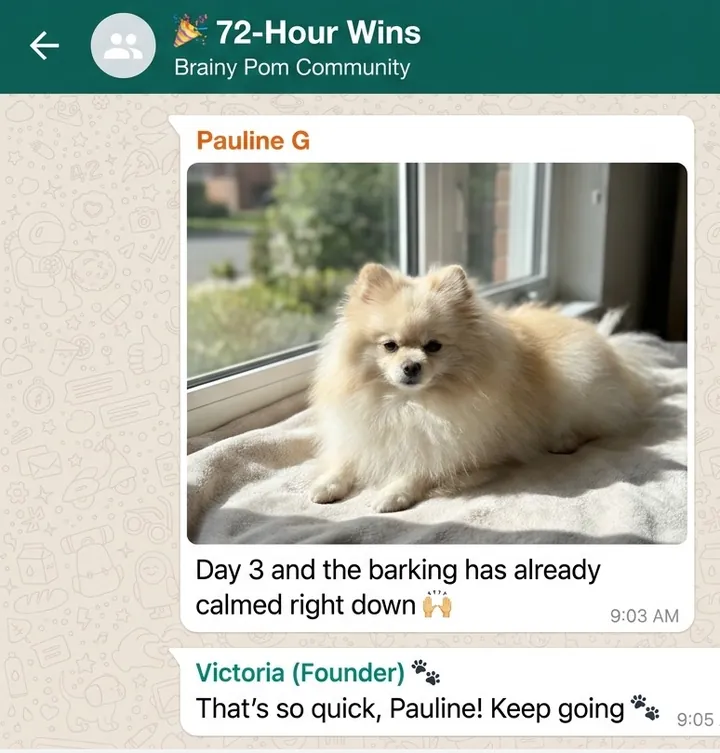
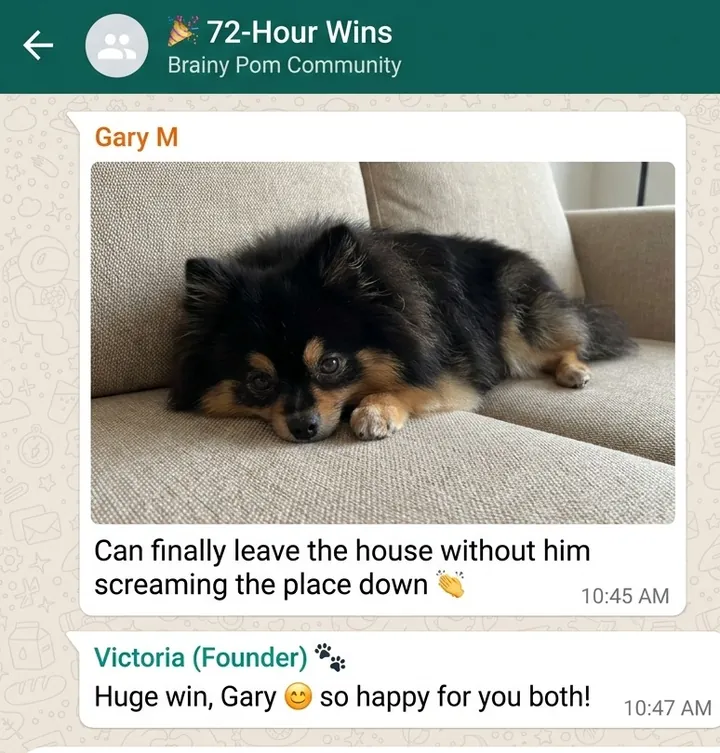
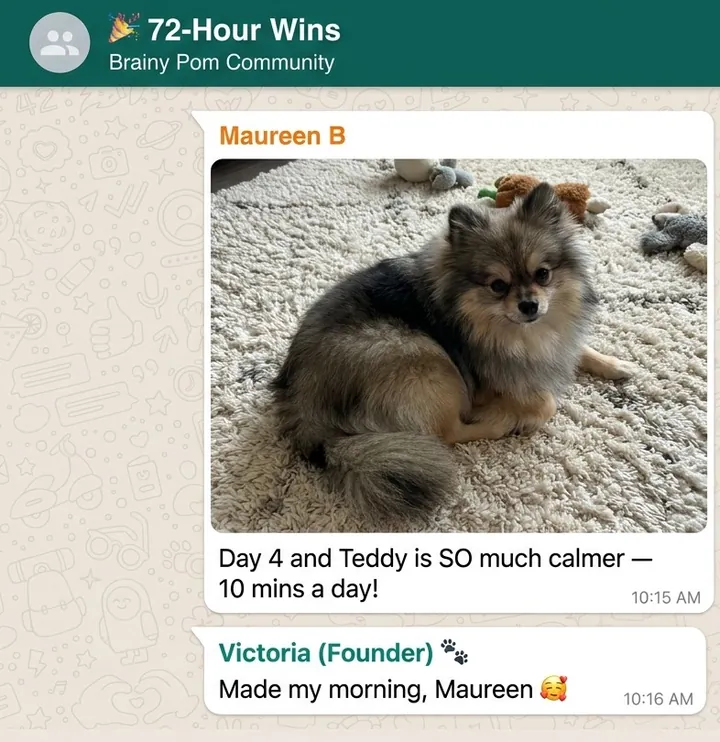
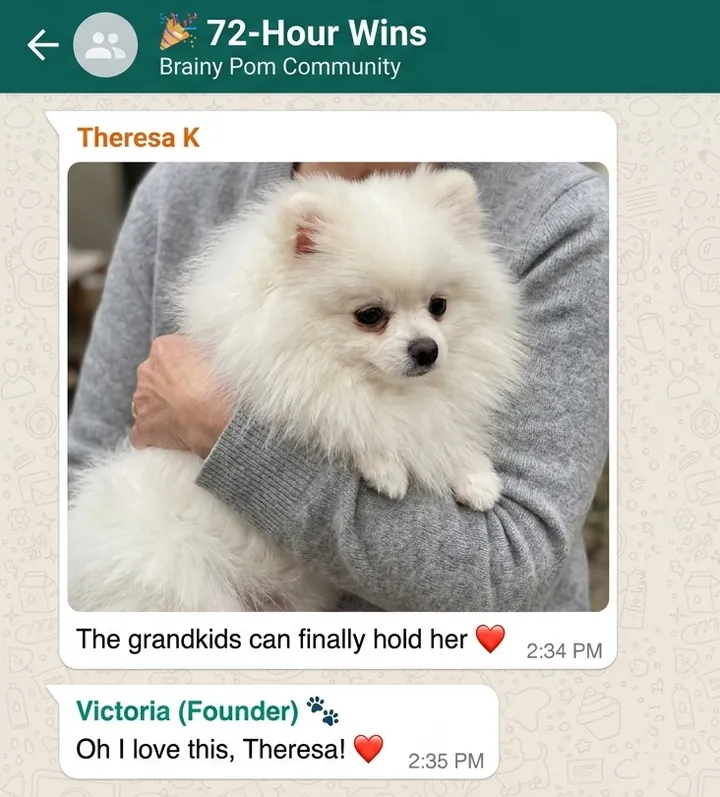
These are real messages from members of the Brainy Pom community.
Pauline G: "Day 3 and the barking has already calmed right down."
Gary M: "Can finally leave the house without him screaming the place down."
Maureen B: "Day 4 and Teddy is SO much calmer, 10 mins a day!"
Theresa K: "The grandkids can finally hold her."
Their Poms are different ages, with different problems. Barking, crying when left, the brush. The reason underneath was the same one I found in my notebook.
Picture Your Next Sunday
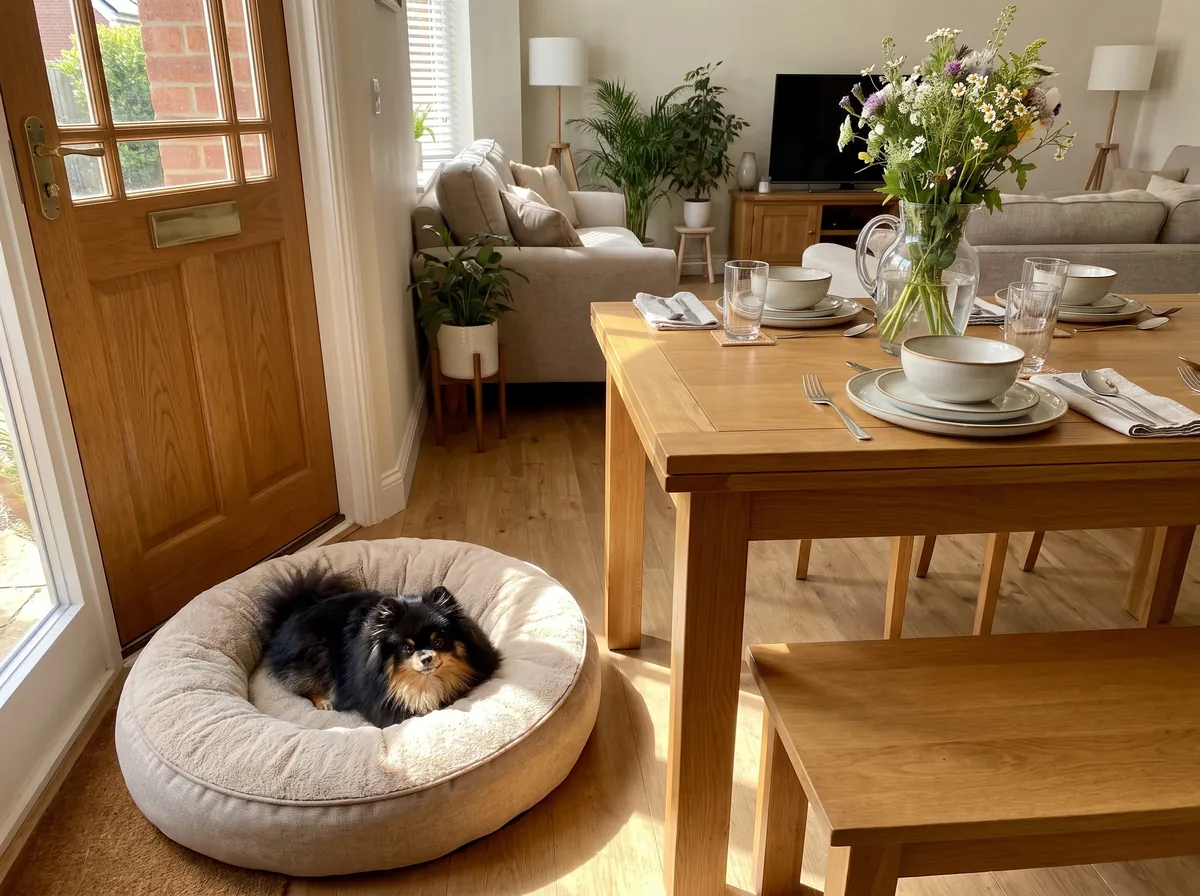
The doorbell rings. Your Pom barks once, looks at you, and goes back to her bed.
You brush her on the sofa while you watch TV. She leans into it.
You pick up your keys, and she watches you go without a sound.
Your grandchildren come in, and she lies down next to them.
No more notes on the door. No more shutting her in the bedroom.
Everything Is $191 on Its Own. Today It's $37, One Time.
Here's everything you get today:
- The Off-Duty Method (the plan + a video lesson for each problem)$117
- The Daily Pom IQ Quiz$19
- The Calm Kit$27
- The private Pom community$28
- Every future updatefree
Total value: $191.
Today you get all of it for $37. One payment. Lifetime access. No subscription.
That's less than one hour with a private dog trainer. And a trainer who has never lived with a Spitz will probably give you the same 4 fixes that made Kiwi worse.
There are free videos on YouTube too. Almost all of them were made with Labradors and Shepherds, and they teach the same 4 fixes.
$37 is about $1.23 a day for the first month. After that, it's yours for life.
Try It for 30 Days. If It Doesn't Help Your Pom, You Get Your Money Back.

I want this to be an easy decision.
Do the 5 minutes a day for 30 days. If your Pom isn't calmer, email us at info@brainypom.com and you get every cent back.
You either get a calmer dog, or you get your money back.
Getting Started Takes About 2 Minutes. Day 1 Takes 5.
Step 1: Tap the button below.
Step 2: Enter your email and card on the secure checkout page. One payment of $37.
Step 3: Your login arrives by email straight away. Open it on your phone and start Day 1. It takes 5 minutes.
If you start today, you can try the "thank you, I've got it" step the next time she barks at the door.
You Can Keep Doing What Isn't Working, or You Can Try the Way She Understands
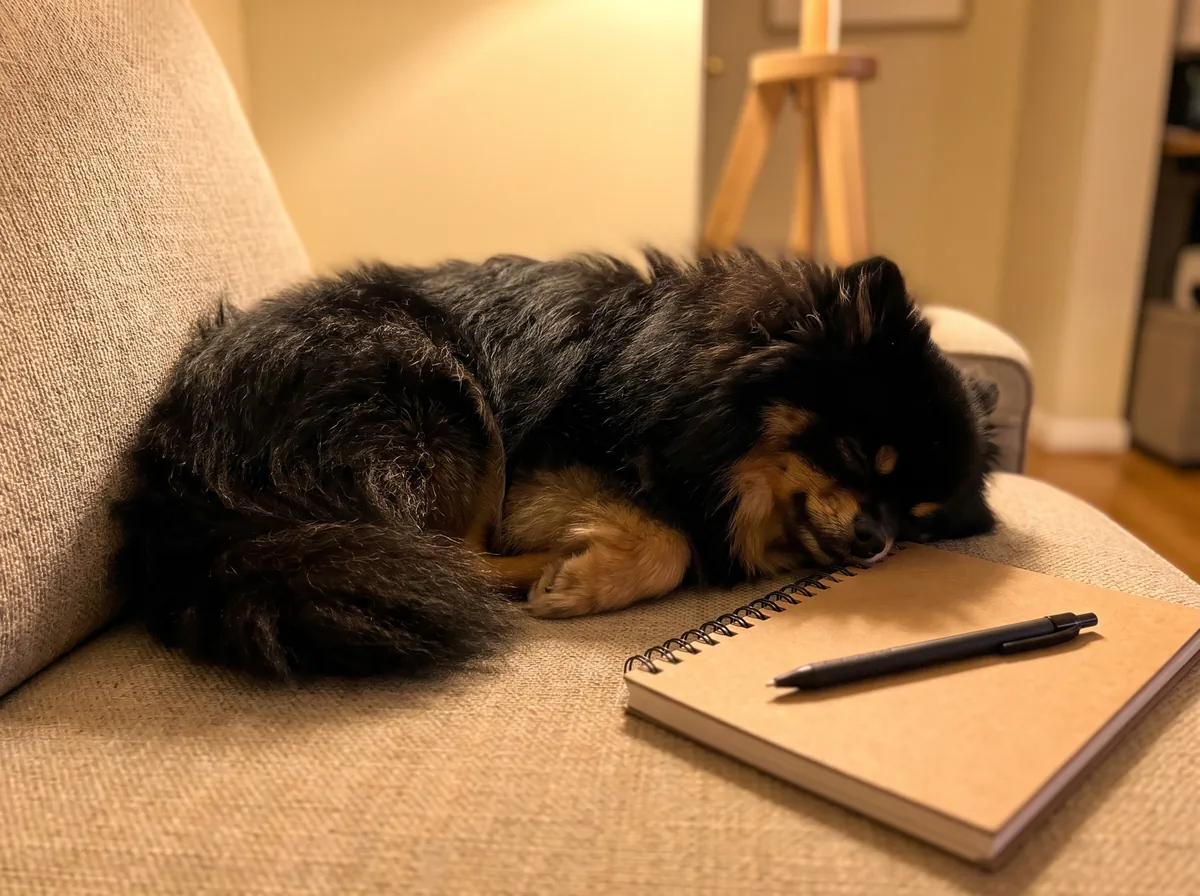
Your Pom isn't going to grow out of this. I waited a year for Kiwi to grow out of it. She got worse, because I kept using the fixes that make a Spitz worse.
My only regret is the year I waited.
You can keep apologising to the neighbours, brushing her in five-second bursts and shutting her in the bedroom when the family visits.
Or you can spend 5 minutes today showing her that guarding the house is your job, not hers.
She has been guarding the house every hour of the day. She's ready to stop. She just needs you to show her how.
Victoria
P.S. The barking, the snapping and the crying usually have one cause: a Spitz who thinks she has to guard the house.
The usual fixes make it worse. The Off-Duty Method shows her it's your job. It's $37 one time, with a 30-day money-back guarantee. Your next Sunday could be the calm one.